

ABOUT       ARCHIVE          RSS       MOBILE       SUBMIT   
Loading

Showing posts with label time. Show all posts

8/11/2011

White Walls


2011
digital collage
7 x 7 inches


7/12/2011

The Dove


I was lying on the bed. It was too hot but opening a window would up the chances of more carpet beetles, the latest plague on my apartment. I was lying there in my briefs, moving my legs around to find cool areas on the blanket. I had that thing where just the backs of my knees were sweating, long streaks of sweat that I felt turn into beads at my calves and then fall. I couldn’t decide if I liked or hated that feeling.

I had just finished masturbating. I was always masturbating on hot afternoons. I was listening to a recording of an Indian man talking about spiritual matters. I was probably bored with it and that’s why I masturbated. He was saying, “there is nothing to be done about believing you are the eye of the universe.” Then I started fooling around with my dick. He said, “you see everything in a great hall of mirrors” and it was hard. It takes it about 9 words (spoken slowly in heavily accented English) for me to get hard. I guess. I was really stroking it when he said, “when I die, reality will rip in half like a sail in a storm.”

Right before I came, I remembered that I should be thinking about Angela, but all I could think about was how last time I saw her she had gotten little rhinestones glued above her vagina. It’s called Vagazzling. She had asked if I liked them and I said her pussy looked so gaudy I half-expected it to be chewing gum. She didn’t think that was funny, and maybe it wasn’t. That was what I was thinking about the split-second before I came and then the orgasm tore me out of my head, thank god. Orgasms never get old. Every time it’s like a goddamn miracle.

My whole life does not consist of masturbating. That’s just what I happened to have finished doing when this bird flew into my window. It was so heavy and white and intrusive that for a second I thought it was a snowball, and then my brain told me No. And then my brain told me Bird. I got up and felt rivulets of sweat fall down my calves. I wiped my cum off my belly with a shirt and stepped out onto the glaring balcony where the bird had fallen. There was a baseball-sized grease smudge on the window where it had hit. Probably Angela would think it was from a girl’s back and ask if I was seeing someone else and why I never fucked her against the window. I decided that if the bird was dead I should put it in my freezer for evidence. But it wasn’t dead, it was something very similar to alive, and it was a dove. There was a dent in its beak from which dark blood was beginning to ooze. I picked up the bird as gently as I could and carried it inside. It kept opening and closing its beak very slowly and I imagined a tiny voice saying, “Ham, haaaam.” I sat down on the couch with the bird in my lap and waited for my eyes to adjust to the dark room. The bird smelled like dust and wood primer. “Hi,” I told it, feeling dumb and helpless. The word “mite” came into my head so I got a towel and put the bird on it. I noticed that its filmy little eyelids only met half-way when it blinked. The Indian man was talking about the ashes of history and I got up to turn him off. I heard a shuffle and a thud and turned to see that the dove had fallen off the couch and landed on its neck in a bad way. Panicked, I called Angela.

“Hellow?” she said the way she always answered the phone when I called, as if she had just stepped out of the shower and was still aglow with steam.

“Hi, Angela. Can you come over? It’s a crisis.”

“Is everything ok with your dick?”

She was terrified of venereal diseases and always eyeing my penis when she thought I didn’t notice, the way my mother used to eye my blackheads.

“Yeah, it’s just a bird. It might be dying.”

Angela showed up about three minutes after the bird died. I was still holding it, it was still warm, as warm as everything else in the stuffy apartment, but with more emotional weight. When I heard her shoes in the stairwell I wrapped the bird in the towel and put it in the shower so if any mites came off, I could deal with them fast. Angela came in wearing a white blouse and sunglasses. Her hair was as blond as anything and a little windswept. She said, “Hi.” I stood up and pulled her by the wrist (thin wrist, nice wrist) to the bed. I started fumbling around with her shirt buttons, which I could never successfully undo, and she pushed my hand away and did it herself.

“What about the bird?”

“Forget the bird. Died.”

"Oh," she said as I worked my fingers through the obstacle of jeans, underwear, and "Oh," again, as I touched the rhinestones.


7/06/2011

The Ice Storm


Download - The Ice Storm


2011
digital image
640 x 427 pixels


6/28/2011

HOMEWORLDS


HOMEWORLDS is an exploration of family secrecy that seeks to alter the limits of both family and archive. It constructs and complicates the story of my recently discovered family in Holland, resulting from my grandfather’s affair over 50 years ago.

In the process of learning about my Dutch relatives I recorded interviews, conversations, and letters with my family, friends, colleagues & therapist. Over 20 hours of audio were edited into small clips, and grouped in themes.

The physical installation involves five radios from different eras, each of which can be tuned through to find five radio stations onto which I've broadcast my audio recordings. The radios all play at once in a single room, creating a cacophony of voices. Viewers move through the space, spending time with different radios, tuning them through the full FM spectrum, and catch pieces of the family archive.

Below is an audio clip which recreates the over-lapping nature of the installation, followed by the separated tracks.


HOMEWORLDS

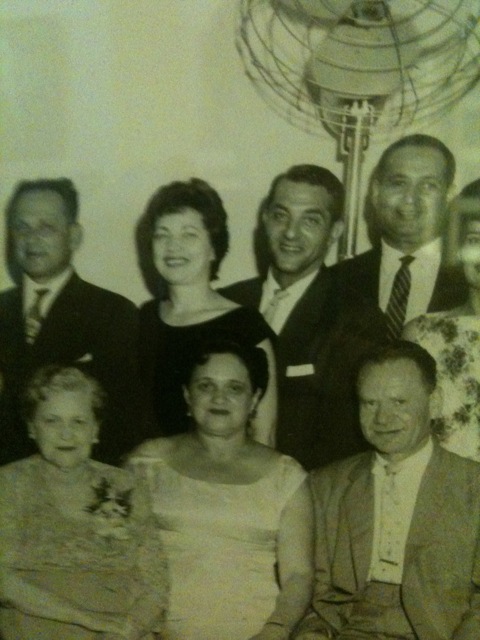
Bernard and Ruth Fuller, circa 1940


Letter From Annie Kluen


Bubbie


Dad


Therapy

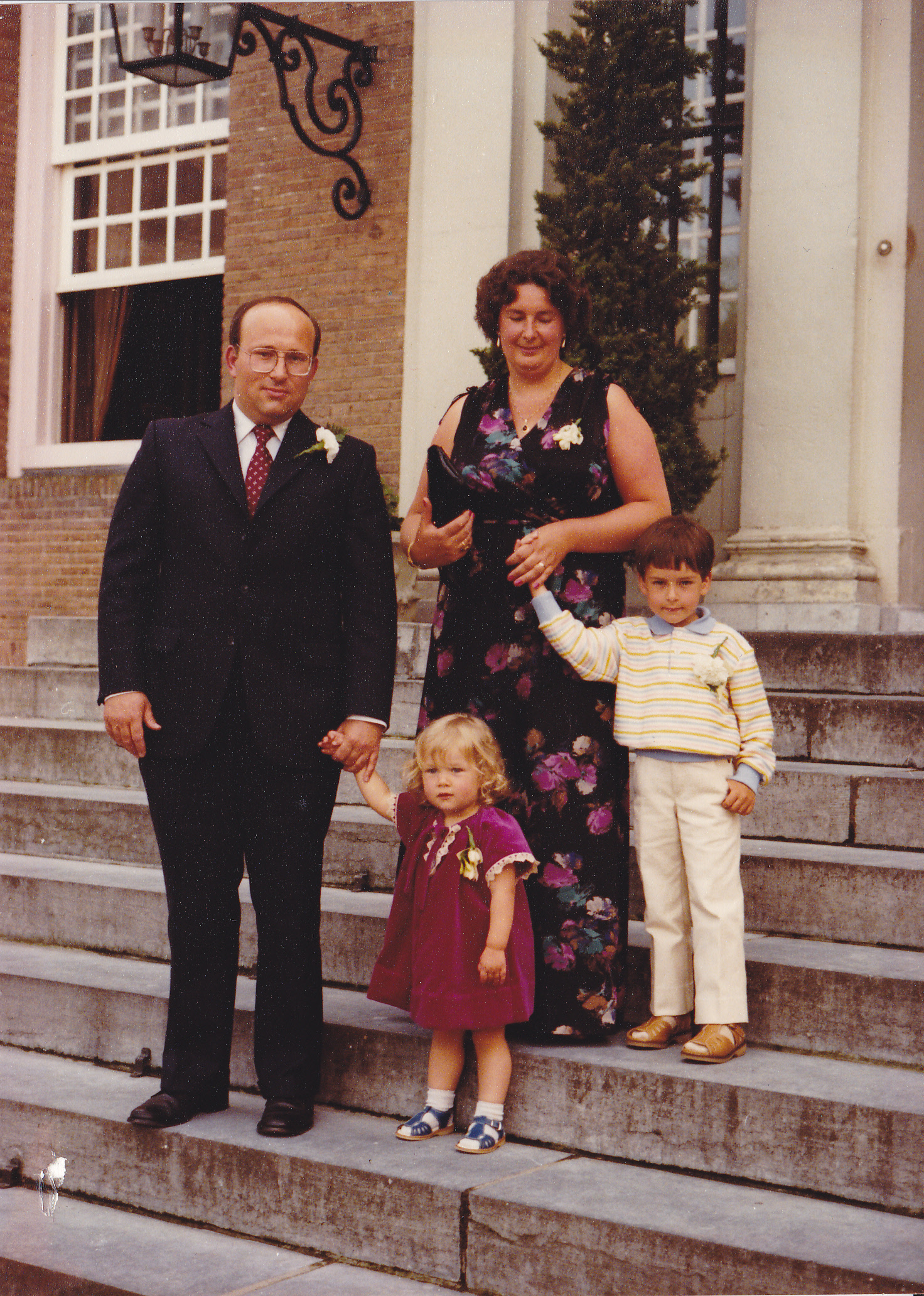
Dutch family, circa 1980


5/05/2011

Berlin Rabbit


2010
watercolor, gouache, acrylic ink
15 x 21 inches


3/29/2011

...and Multiply


“He said: ‘Take now thy son, thine only son, whom thou lovest, even Isaac, and get thee into the land of Moriah; and offer him there for a burnt-offering upon one of the mountains which I will tell thee of.’”
-Genesis 22:2

As a father, consider the instruction.
Dream this growth of being, spoken
as castration, as deadened manhood’s
final, unexpected flower, kerosened.

Hear the built trust in the boy’s voice,
the pride he takes in bearing wood.
The smell of wool on his small hand,
of sweat slicking a rope. You know

even before this burning, how smoke
excites the nostrils, how knees need
the Earth to touch them. You know
the crimson of a creature giving life

to a just God, the prayers sung
by fearful throats of man and son.
The knife prepared above his neck
shears each of your boy’s prayers.

Walk down the mountain together,
eyes touching Earth, smoke hanging
in crimson wool, your boy no longer
bent by firewood’s weight. Your boy,

no longer.


1/27/2011

INRI


A name is something
     you can’t crawl out
from under.

It binds you
     to yourself.

Is that what
     Christ felt
in the garden?

Did his cup
     say this
Is your blood?


“I am
     what you say
I am.”

That was his
     moment of Truth.

A name is something
     you can’t crawl out
from under.

It is nailed above you
     until someone
lets you down.


1/21/2011

General Electric


Lately, the rattle of my fridge has been keeping me awake.

Where I live I have to bring my own fridge
or rent one. You know
the kind with a microwave attached.
I have a tube TV.

I was prepared for a year of warm beer,
for doggie bags with early expiration dates.
“Sell by twenty-four hours after the meal.”
But Aaron, he lent me his fridge.

For two weeks I slept soundly
before it reared its ugly head. Bad vibrations.
Did I put it in the wrong spot?
Did I stick it with the wrong magnet?

I've removed, from its top, everything:
The clock radio, the plastic containers.
The clock radio still goes off.
The cold cuts still are cold.

The fridge rattles.
I put it at the foot of my bed.
In the middle of the night
I give it a kick.
Sometimes that does the job.


1/19/2011

1923


he sits on a piece of wood
cracked as toenails
protruding, yellow glances of the Depression still in his cup,
which reeked of cranberries and vodka.
when I woke on Monday morning
his hands were copper and full
with grapefruits and melons he bought from his friend the domino player
and the Oldsmobile would ride proudly, coughing,
to school with me pressed and clad in blue polyester.
the hand wave sneaking through the car window
said so much about the brown in my eyes
and the sunflowers that grew in his garden.


1/07/2011

How to Make Mistakes


Don't do it the way you did
the last time. Inspect each bone
holding you upright. Remove
the most shapely one. Notice
its absence from your body
as you dance. Don't do what
you did before you were born.
No number of warm assurances
will protect you from sharp joy
or its precursor, a shadow
whose touch tints your cheeks
scarlet. Don't do it the way
you were told more than once.
Trust in your oracular organs,
so often silenced by facts.
Don't do it as these words
instruct. They are the silt
of a lived river, unheard
proverbs worn hollow by use,
a careful composition sung
in entirely the wrong key.


10/19/2010

Snail Talk


Growing up in Los Angeles, I took walks around the block and found myself stepping on a lot of empty snail shells. The sharp, crunching noise kept me coming back to this one spot, guaranteed to be overloaded with empty snail houses. I never liked the gooey ooey part of the snail, and to this day I hate worms. They are gross. They don't have that nice shell to cover up their grossness. But snails have since grown on me (idiomatically, not actually grown on my body). In fact, I kinda love them.

A couple weeks into the snail house-wrecking period of my life, I was at the car wash with my mom, waiting and being bored and 6 years old or something. There was a weird gift shop vibe at this car wash. It was as if the car wash dudes were thriving off the bored little kids who got tricked into going on errands with their parents. There was this spinning puppet rack, like the kind you'd see in a toy store. Of all the fluffy and soft animals I could stick my hand into, I chose the snail puppet. My mom bought me Snaily, the snail puppet, and from then on out Snaily officially came with me everywhere I went. Here is a picture of Snaily and I, dinning.

It is easy to imagine Snaily’s fate resembling Woody’s in Toy Story 3, just chilling on the bed, waiting to get played with. But Snaily was actually a big hit in college. Rather than just a puppet, he was kind of a comforting glove. You put Snaily on your arm and you can still pretty much do anything you would normally do, it's just a little funnier looking. You forgot that you were wearing a snail and went about your business - eat a banana, turn off the light, something. My friends' evolving intrigue in Snaily and their appreciation for my random interest in all things snails made it easy to get me birthday gifts. I started to rack up on the snail paraphernalia. I left college with a snail lamp, a snail clock, a couple snail candles, a snail necklace, an I <3 Snails magnet, a snail-print cloth from straight-up Africa, a couple snail shirts and the list goes on. Nowadays, people send me sweet images of snails or photos they've taken and think of me when anything snail-related is involved.

Anytime the moment arises where one would need to draw something on a wall, or carve their name in a tree or just generally graffiti (pretend that's a verb) something, out comes a snail. It's a nice go-to and I feel pretty lucky to have it. The other day in the subway, I saw someone had drawn a snail smoking a cigarette on a poster. I think I have a doppelganger out there. That's cool.


10/12/2010

Woven Bones Interview


Andy, Carolyn, and Matty are in the Austin, TX band Woven Bones. When I was there in August I was talking to Andy about where we were going to meet for the interview. He said I could come to their practice space. He said there was a giant moon rock out back. I said that sounded good. When I got there, the trio took a break from playing and led me to the moon rock. Together we orchestrated a conversation, and below are the stories that came out of it. I edited out most of my prompts and left Andy's words, because that's how my man Studs Terkel used to do it. The band will be in town next week for CMJ so feel free to check their dates and catch a show.

Andy: As far as like a, "what is the coolest thing is the world that you could do?" kinda level, always in the back of my mind I think, "being in a rock band." Giving your songs to people. Having people like your songs. It's been a fantasy of mine.

Nivana, the Cure, fuckin Sonic Youth, fuckin Weezer. I mean, Jesus and Mary Chain. Velvet Underground is one of our bigger influences but I didn't even really know the Velvet Underground until I was like a senior. In high school. I grew up in a real - I got into everything through 120 Minutes on MTV. That or whatever my skater buddies listened to. My parents liked the Beatles and the Mamas and the Papas and the Kinks. And Tommy James and the Shondells. That was their biggest contribution to my record collection. Nothing too far out or wicked cool or underground or anything.

I grew up in Jacksonville, in the city, five minutes from downtown. I grew up skateboarding and playing basketball and riding my bike. Doing all kinds of shit. Skateboarder forever. My parents moved out to the burbs, far out, when I was 13. Kinda like the country. I didn't want to at the time. Because all I did was skate. And we were an hour away from downtown. But it was cool because - they were few and far between - but the kids that I met there were all really cool. I met people, and driving an hour back to town and having older friends that could do it ended up not being a problem. I did that whenever I could. And there was actually a cool punk scene of, not house parties, but more at veterans' halls and crazy shit like that, in the area where my parents lived. It was a weird time. Veterans' halls – they would just rent out a space and throw a show for a band that was on tour. It wasn’t total hickville. It was, but it was a different day and age. It's backwoods Florida but there's a beach there. There's a beach, there's a downtown, there's an urban area around downtown. It's a legit city. It's not as far behind as some people think Florida is. I mean it is, but it's not.

There was an old place called Einstein a Go Go that was on the beach. And I mean, The Breeders and Nivana and The Pixies, and The Melvins, and Arches of Loaf - all these cool bands, like Luna, right before they got big - they would come through and play Einstein a Go Go. All of the people that were older, in their late teens to mid-twenties, a lot of them are still around in Jacksonville. They've always done nights in Jacksonville. So from when I was able to go out, there was always really good indie rock/rock and roll/punk rock dance nights. Those don't exist in Austin, or lots of places. Where they just play really fucking good indie rock, and a sea of people dance. It was different places, after Einstein a Go Go. When that place went down, everybody filtered into the urban neighborhoods around downtown. There were a few places that had that kind of thing. Thursday and Saturday nights. There were two different places. Every hip kid - that's where we were all at. And we'd just get wasted. I mean, whatever 90s indie rock to whatever's cool now. They'd play all that. And all the hits. And everybody just danced their asses off and has a good time. Old school dudes would dj. It was fun. It was what we did. Compared to Austin. I mean I like dancing. You like dancing, huh Carolyn?

Carolyn: I love dancing.

Andy: Yeah, I mean I like dancing and having fun. We all like – from shitty new pop music to - I mean they'd even play whatever crazy hip hop was rad. It was just good shit that kids like. Just the regular shit that everybody loves. It was not genred-out or anything. It was just the shit and everybody danced.

Besides really crappy punk pop bands - like Limp Bizkit is from Jacksonville, really crappy shitty stuff like that - there was never really any cool bands that played good stuff. That's kinda why I moved out. I went to college and I went through a bunch of shit, and came back home and wasn't really doing anything. Everyone was still there. Everybody goes out and parties and has good taste and are good artists, but they're all armchair critics, and I mean it in the kindest way. I love everybody from there. Everybody's an armchair critic, they talk about everything, the good and the bad, smoke shitloads of weed and get wasted, but nobody ever actually participates in creativity in a fashion that they actually try to go out, and get it out. A lot of people don't do anything. They're just lazy.

I had sort of a panic attack. Actually, it was the worst job I ever had. I was working at Guitar Center. I went through a bunch of dark times. I broke up with the girlfriend I was with for years when I was in college. And then a few months later I lost myself to drug-fueled abandon. When I got my head out of that I was living at home just to get my feet on the ground again. I worked at Guitar Center. When you first work there you work in accessories. So I just knew about guitar pedals and a bunch of stuff. I knew about the stuff because I was interested in it. A lot of people work there and don't give a fuck. They're ex-musicians who were used car salesmen and got fired from that, and now they're selling musical instruments as if they were used cars.

You work on commission. You have to fade your pay. That's what they call it. To get commission on what you sell you have to outsell your hourly wage, and then you get a percentage of what you outsell. And if you don't outsell your hourly wage, your job is at risk. So they make you make these annoying phone calls to people, which I never did. I just acted like I was doing it.

I did really good and they tried to move me to guitars, which is a more money-making side of the job. I did really good the first day and as soon as I did good all the old dudes who worked there, all the sharks – I'd be talking to a customer, trying to give them the right deal for what they needed and get them out of the store. It's like, moms shopping for their sons and daughters. The kids, either they know what they want but it's too expensive but they can get something that's just as good, or they don't know what they want at all, and you want to get something that is proper for them. And all these other guys wanna do is make as much money as they can and they don’t give a fuck. You know what I mean? So they would cuss me out or try to make me look like an idiot and get loud and then swoop in and steal my customer. And I was like, "Well, I don't give a fuck. Hey, brother, I'd just rather be king shit of my little shit-fuck mountain in accessories and work back over there." I don’t give a fuck about competing with some dude who used to play keyboards for Gloria Estefan back in '85.

I was starting to write Woven Bones songs and I had a lot of stuff going. But it was so soul-sucking and fucked up. I started having all these like – the economy was just starting to fall – and they started having all these sales meetings. And they were talking. And there was all this shit. They were crazy sharks and weird shit. I was just stoked to work around instruments. Even if it was at fuckin shitty ass guitar center, it was cool. Then I worked every day of the week. I only had one day off. I basically worked from 10 until 8 at night, and I drove an hour to work in the morning and an hour home. I didn't ever get to do the stuff that I wanted to do, that I thought would be more possible because I worked in a music store. Then shit just keep getting more and more corpo and sales-oriented and weird. I sort of had this panic attack one day. I and talked to my friend in Orlando and I was like, "Dude, I'm just getting the fuck out of Jacksonville. I don't know what I'm gonna do, but all I need to do is get out of here." It's only an hour away. It's a quick move. I moved to Orlando. I worked at a vegetarian café that was family-run. I was the only employee besides the family. And I played music with my friend Curtis. We started Woven Bones up as a two piece band. When the economy crashed, a bunch of shit went awry at the restaurant. A bunch of equipment broke, like the air conditioner broke and shit. They were all kinda like, bumming around. I was like, "I know I'm the only person who's getting a non-family paycheck. A legit paycheck. I don't wanna beat around the bush or be a burden on you guys. Let me know. Because I've got some friends in Austin that told me I should move there. And I'm sure it wouldn't take a lot to move there." They were like, "Yeah. We were gonna tell you that we might need to let you go." I was like, "Well let me work until next Friday and just pay me out in cash and don't give me a check and I'll be out and everything will be cool." So that's what happened.

I've been able to get by. I get by by the skin of my teeth a lot. There's a lot – I dunno. It just seems each easier here right now for me. And it has since I moved here. I think that I was lucky that things kind of took off for our band in whatever way they took off. It's given me, even in a miniscule way, opportunities to make money doing design work and stuff like that. Just freelance. It's cheap here. I haven't lived in the best places. I haven't been as comfortable as I have been in the past. But I've been able to get by. At least for me and Matty. Carolyn's just now stepping into the role of casting aside things to play in a band. It's enabling. To get by and keep up. The town is supportive of music. We're lucky enough to have - for whatever strange reason, right when we started people paid attention to our band.

LL: How did that happen?

Andy: I dunno, do you?

Matty: I dunno. We're good?

Andy: Maybe we're good, I dunno. I had people who wanted to do our record – like Hozac – when it was just me. They heard songs on the internet. I moved to Austin with a bag of tools that enabled us to do things. A bag of tools that a lot of people don’t have. Record labels that wanted to do records. I told them to wait, that I would find a band and we would tour. There's a lot of bands these days that never leave the bedroom. They write cool records and it's 7 inches and stuff, but they're just bedroom projects. I was like, "I really don't wanna be one of those. If you want to spread my music around to the world or the internet or whatever, I would love to be in a real band and actually support it and try to do as much for you as you can do for me." It's worked out. Everything we have right now has been a successive thing of people hearing what we put out. I've never sent off demos to anybody. There's a lot of small record labels around, and we've tried to pick the best ones to work with who wanted to do stuff for us. It ended up being, as far as we can see right now, the right decision. We signed. Now we're on a label called Hardly Art, which is part of Sub Pop. Which is cool. We're all stoked on it. We're not rich. We didn't take a bunch of money, agree to get a big advance or anything. We're happy to have a home with a really good team of people behind us who genuinely like our band a lot. We signed for two records. So if our first record that we do with them totally tanks, they can drop us. But as long as we work on it, I doubt that will happen.


9/08/2010

Went out for a pack of cigarettes and never came back


Greg Huffer went out for a pack of cigarettes and never came back. It was Jennifer’s 5th birthday. Party hats and birthday cake on the floor. The dog was on the floor. His son Jake, 7, on the floor. Goin’ out for a pack of cigarettes, Greg said. Jake held his arm in front of his sister as if protecting her from a sharp stop. Can I come?

Anne Huffer would not let her children cry after their father went out for a pack of cigarettes and never came back. Listen children, she said. Your mother has long legs and you have tongues in your mouths. The cake on the plate in her hand shook. Jennifer, clean the cake off the floor. Jake, run the faucet. Your mother has long legs. Your father is gone.

Jennifer Huffer began doing JC Penney ads a year after her father went out for a pack of cigarettes and never came back. Jenny on a bike. Jenny on a horse. JC Penney catalogues slip under every door in America, in every town she couldn’t spell where grown men hide. Jennifer Huffer married a Jehovah’s Witness: a religion with no birthdays. One night they went to a meeting hosted by a man who had gone out for a pack of cigarettes and had never come back. In the kitchen, men were going out for cigarettes and never coming back. In the bedroom, in the dining room, until Jennifer ran outside, in time to catch several men gunning their trucks, on their way out for cigarettes. Where’s my brother? She choked into the exhaust. Where’s my brother?

Jake Huffer had his mother’s legs. He made it onto the football team without trying out. He got bored walking around his town so at 17 he walked to another town. Then, he walked to another town. He hung on the edges of groups. No one lonelier than a good-looking man. He tried to be funny, tried a card trick. Looked up his father who was living with a woman with money. They didn’t let Jake stay; trucked away from him fast at the bus station, the woman’s blue coat sticking out of the cab’s door. Jake doesn’t know how long his father lived with that woman, or why the memory of her coat sticking out of the door comes to him now, watching his girlfriend slice through a party in a blue dress. It’s a blue she’s proud of. It’s a blue for him. Gifts repulse him. He’ll punish her for it later. He will give it to her under the awning, over and over, until she can’t look at the dress without feeling sick. I need a cigarette, he says when she reaches him. Baby, she says. You don’t smoke.

The night before Greg Huffer went out for a pack of cigarettes and never came back, the Huffer family had a party. Greg Huffer picked up a guest’s banjo. Greg Huffer who did not play the banjo played on the banjo an off kilter song and sang along in a dead way. Anne Huffer, smelling like mother perfume and dishsoap, knelt so she was the same height as her children. Look at your father, she said, her breath Christmas-quick. That funny man. The laughter on the tin strings and the jangling of guests. Look, she said, listen. Their mother kneeling behind them, Jennifer and Jake could hear but not see her as all three stared at the same man.


9/03/2010

Two Alleluias


The thefts had been small: last milk from the carton,
a moment, a glance, the buttons from my dress.

We sat where you gutted the fish, the house dark,
and our suitcase zippers glared back at the sun.

Passengers emptied onto the street the way doctrine
charges from the apse. A bus hissed, whimpered, and

lurched away. Your watch ticks out on the nightstand
until the little black beetles overcome the flour.

The gifts were also small: a bistro matchbox, a touch,
a shiver, a clover dried and pressed in the middle of a hymnal.

The cat would not stop licking her haunch. I, too,
sweltered in my fur.


8/24/2010

Letter in Retrospect


Dear Attractive Male Friend of My Mother's,

You were forty-three.  Me?  Thirteen going on thirty-five.  I loved the way you loved your wife and child, but let’s face it: you and me, we were meant for each other.  The way you’d sometimes wink at me from across the table at Mom’s dinner parties.  That time I came back from the orthodontist, and you told me not to worry, that I really pulled off the clear braces look.  You let me sit in the front seat sometimes even though I didn’t weigh enough to set off the airbags.  Remember us?  That’s when we were wild.  When nothing mattered.
 
All those times we high-fived, I knew what you were really thinking: how could I be so young, and yet possess such an old soul?  How could I see straight through your façade and deep into your heart?  How did I understand you in a way even your closest friends never could?  I couldn’t say for sure.  But if I had to guess, I’d say it was because we both really loved Seinfeld.

I liked your button-down shirts.  Your leather wallet.  Your grown-up accoutrements.  At my Bat Mitzvah, you told me I kicked ass.  Way to be subtle.  Thanks for the present, by the way.  That Tiffany’s bracelet with that dangling silver heart.  You may as well have just flat-out told me you couldn’t wait until I was legal. 
 
I forgive you.  I forgive you for bringing her to my piano recital.  For putting your arm around her as you told me you loved my interpretation of Jolly Old Saint Nicholas.  For ruffling my hair and robbing me of all my dignity.  I forgive you.
 
Hey. 
 
Remember that time we all went out for ice cream?  I let you try some of my rainbow sherbet with bubble gum chunks inside.  I had never shared a spoon with anyone before. I just thought you should know. 

X
Emma

7/29/2010

Half About Julie, All About Me


The longest and most frequent pause in my life, a year out of college, comes after being asked, “So, what do you do?” and right before I answer, “I wait tables.” Obviously, I do other things but the asker doesn’t mean, “How do you party?” The asker means, “What do you do to make a living? How do you financially support yourself?” The pause doesn’t come from my dislike of the job - I like it a lot - but from my inability to see beyond the title of waiter when I am forced to define myself. I pause because it takes a moment to deal.

Last week, while working a busy brunch, a girl, a cute one nonetheless, asked if this was my place. If she had not been with her hung-over boyfriend, I would have taken this for flirting. Still, I felt flattered, as if I had been mistaken for a celebrity, and not Topher Grace this time. Inarguably, being a restaurateur is far better than being a waiter. Besides the perks of more money and the ability to run shit, a restaurateur, like an artist or musician, receives a unique suffix that sets him or her apart from the rest of us laborers.

My boss, Julie, actually owns the French restaurant where I work. However special her label, it is still a label. Along with having this label pushed upon her, Julie is also forced to be the face of the restaurant. She is always there, and whenever people wave through the window, they are waving at Julie. Most restaurant owners cannot separate themselves from their restaurant. The egomania portrayed on these chef and kitchen reality shows is, unfortunately, pretty spot on. Julie lacks my pause-inducing anxiety not only because she has a more esteemed, title but also because she possesses a remarkable ability to separate herself, her identity, from her restaurant and whatever label she is forced to declare upon meeting someone new.

Even while at work, Julie doesn’t care about how her restaurant is perceived. Last Thursday, Glen, a bartender from down the block, came to eat before his shift. He asked if we had this whiskey or that rum. Could we make this cocktail or that specialty shot? He was showing off, pluming his peacock feathers, and Julie was having none of it. She only responded, “absolutely,” then poured him a glass of rose with a silent smile. The bartender’s posturing is pretty common on our block filled with bars and restaurants that, like us, have been around for about five years, some less. Because he was about to head to work, Glen was dressed like a greaser – his hair was slicked back and every article of clothing that could be cuffed, was. This is how the owner of that bar dresses and how he makes all of his employees dress. The bar is a scene straight from The Outsiders and very much imbrued with the owner’s identity.

Julie, though, she couldn’t give a fuck about what I wear.

This isn’t to say that Julie doesn’t love her restaurant, her bar or the bottles that fill it. We have a drink each night before we close and she stares at the many French liqueurs that line the shelves. I think I have caught her petting them. We taste the anis flavored Pastis. I think of how much I hate black liquorish but she thinks of her college where they would drink it without ice while “talking about Foucault and so much worse.” She cuts a slice of orange for the Lillet Blanc that I won’t be able to sell and tells me about the bull fights that happen in the south of France every August. I’m sure she could tell me similar stories about the stained wood tables or the curtains that she changes every season.

I take comfort in the fact that Julie is older than I am, and I hope that my pause will diminish with time. During slow shifts, with nothing to do, I imagine what Julie might have been like at my age. Every version is a total babe but one of them - my favorite – is like me because she also has trouble telling people who are future art dealers and politicians that she is a waiter. She has trouble, not because of their jobs and not even because of her job which she likes, but because she is afraid that this waiter that she proclaims to be, this self assigned classification, will get in her way of actually being herself which she will, in the end, become.


7/15/2010

Mama


2008
Oil on Canvas
27 x 19 inches


6/25/2010

Big Bridge Diary: Part 4


Chen Si spends his weekends on Big Bridge which crosses China's Yangzte River, attempting to stop people from jumping. This translation of excerpts from his blog will appear on Low Log in four parts.

Read: Part 1, Part 2, Part 3

10-20-2008

4:50 p.m. I am patrolling the South Fort section of the Big Bridge, when I notice a woman. She looks several times over the edge of the bridge. I cross the street and come up beside her and try to get her to tell me what was wrong. She just cries. I advise and persuade many women who come to the bridge and they say not one word.

At 6:00 p.m. her cell phone rings and she answers. On the other line is the voice of a man who tells her that he wants her to stay [on earth] and live on. He arrived 15 minutes later and drove her away in his car. He told me that this situation [the attempted suicide] was all the result of a little misunderstanding.


08-17-2008

Tuesday morning: a man darted through the bridge’s traffic and — despite the pleas of onlookers - jumped into the Yangzi. Thursday morning: at the South Castle section, a young man plunged off the Big Bridge and died on the spot as he hit the concrete below. Friday morning: a young woman at the South Castle section jumped into the Yangzi, hit just by the water’s edge. She died on the spot.


06-22-2008

A middle aged man, standing right by an armed guard jumped off the bridge. His body was found in a flowerbed.


6/09/2010

Interview with Sam Herring: Part 1


I met Sam Herring, the front man of Future Islands, on April 4th before his show at Glasslands. We strolled around a corner and sat on a little ledge and talked for a little while. I told him I grew up in New Hampshire and so he started out by telling me about his experience there seeing "one of the greatest musical performances" he's ever seen. The interview will appear in two parts. Sam and the band will be back in town this weekend to play a show at Silent Barn on Saturday, June 12th.

View: Part 2

LL: What was the crowd in Portsmith like?
SH: It was awesome. There was this band called the Texas Governor. It's a really interesting story. The guy who was the Texas Governor, his band, he had this band in the mid 90s in Boston called the Elevator Drops, and they were getting kinda big, they were touring with Blur, it was either Blur or Oasis. When they were big in the U.S. they were opening for them, and when they got into Texas - cause Dave grew up in New Hampshire – as Dave tells the story, he was blown away by all the space. And he decided right then and there that he was gonna move back to New Hampshire and marry his girlfriend. He wanted to be a father and a husband. So he quit the band in the middle of this tour, that probably would have made them take off, and then he later did the Texas Governor as a solo project. But so, the whole crazy thing was that William, our bassist, was a huge fan of the Texas Governor in high school, because he saw them open for some band, either a Frank Black show or a Smashing Pumpkins show, he saw them open and it blew him away. So William contacted him, and asked if he would play with us, so dude set up a show, and the whole thing was we got there and we thought we were gonna meet this guy, this big star, and he was just this older really sad looking guy. And he tells us this crazy story about how he just had to take his step son that day to the insane asylum, because he had a breakdown, and he's saying it in this deadpan. And we had just met him and we're like 18, 19 years old like, "Oh, man! I'm so sorry!" And then he's like, "Oh, I'm just joking," and we're like, "Haha…uhh," and he's like, "No, I really did have to do that, " and we're like, "OH FUCK!" And it was crazy, because we played in this upstairs bar. It was the first show he's playing in 2 years and he'd assembled a band just for this show, just because William was this huge fan. But it really cool though, because we became good friends with him, and because of that show he started doing more stuff and was really inspired by us, because we were making weird pop music, and he got more into writing pop songs again and having a good time with music. The show was in the Red Room in Portsmith, New Hampshire, and it was one of the greatest musical performances I've ever seen. It was really watching a man who was affected. Because we knew that he was hurting, and he still went on with the show. He was a true performer. I can only imagine seeing him in his prime. I got to see him later, but that night seeing him was like seeing a man break down. Fuckin'… It was really powerful. I mean, I try to channel that with my own performance, and I was very young at the time and impressionable, and that has always struck a chord with me, watching that show. It was amazing.
LL: Did you stay in touch with him or see him perform another time after that?
SH: Yeah, we played up in New Hampshire at least two or three more times with him, and those guys also put us on in Boston once and did a big show with us. And that was pretty cool because at that time hadn't really – and I'm trying to think – that was Future Islands. That was a Future Islands show.
LL: Where were you living at this point?
SH: This was when we were still in college in North Carolina. We were like, freshmen in college during this first tour.
LL: What was your school like in North Carolina?
SH: It was a public university. East Carolina University. Me and Gerrit, the keyboardist, we grew up together, we were best friends in high school, on the coast of North Carolina. All three of us in Future Islands are from North Carolina. Me and Gerrit grew up in a small town called Morehead City on the coast, and Willam's from a small town called Wendell. And so me and Gerrit went off to the same school. We never made music together in high school. Gerrit made music. I was into hip hop. I was an mc, and went off to college I was trying to find somebody to make beats for me, and me and William met because we have all the same art classes. ECU is a big school. It's now the 2nd biggest college in North Carolina, which is kinda crazy because it's in a small town. The town in maybe twice the size of what the university is, like the town in maybe 40 or 50 thousand, and the school is now like 30 thousand, it was like 25 when I got in. And so we went to school, and me and William met, and I found out that he made weird music, and he gave me a cd that he had made that summer called Computerness, it was one those 2 and half inch CDs, they're like the little discs. I don't even know if they make them anymore. It was a really cool thing when they came out. They had like 22 minutes of music. And William made this album that was 38 tracks, 22 minutes, called Computerness. It was a really weird album. It was kinda like Kraftwerk making music on the first Apple computer, or like, Kraftwerk's little brother making it. Like Ralf and Florian's cousins got together and made this music on their first apple, and it blew me away. Me and William started shooting off ideas, we were instant friends, very similar in what we wanted to do. So me and William had the idea and we started the first band and Gerrit came in really right after we started. We played one show and Gerrit was in, and that was as a five piece at that time. Kim was one of the musicians, and she's the girl who does our artwork, she lives in New York, she's a working artist, and an amazing artist, but she went off to graduate school and we kept going. And then our friend Beeby, who when he left Greenville after two and half years of hard work, we moved on and started Future Islands. The first band was Art Lord and the Self Portraits.
LL: So that Computerness album really struck a chord with you.
SH: Well you know, when you're 18 you're very impressionable and just into everything. And it was something different that I heard. We didn't really listen to the same things. He was really into 80s music and dance music, and I just listened to hip hop and jazz, and was just getting into post-rock like Tortoise. Lots of underground west coast hip-hop. Global Floatations, Freestyle Fellowship, CVE, a lot of weird things, and then jazz and stuff. But it was kind of that thing like, William turned me on to Kraftwerk, and I had heard of Kraftwerk but I'd never heard their music really, but I knew that Kraftwerk was the band that the first break came from. I knew the history of hip-hop. I was deep into hip-hop, and I knew that Afrika Bambaataa created the first break using that song to create Planet Rock. So I was like, "Kraftwerk! Yeah! Those dudes started hip-hop!" And William's like, "No…I didn't know that."
LL: Right. So you were making the connections. How did Future Islands, as it is now, come to be?
SH: When we started Future Islands that was the very beginning of 2006. And then actually the Texas Governor comes back into play. Art Lords started in February of '03 and we played a few shows, and when our keyboardist left - because it was the three of us and then our friend Adam Beeby – when he left town in September of '05, so we had been together for two and a half years, we just decided to quit doing Art Lord. It was a concept band and we were trying to get away from that and be more serious. Honestly, I wanted to keep going with Art Lord, but Gerrit wanted to get out of it. I think Gerrit felt like it was holding us back. And then William kind of sided with Gerrit. And then it was just the three of us, and we try to run as a democracy so I said, "Whatever. I just want to make music with you guys. I don't wanna fight over –"
LL: What did they want to do?
SH: Well, the whole thing with Art Lord was that I, you know, was a character on stage. I spoke in a German accent. I slicked back my hair. I played this character. It was a performance. And you know, my character wasn't – he was kind of a silly, asexual, narcissist figure. Just in love with himself, knowing that the world loved him. It was fun. It's a very fun thing to do.
LL: Was acting something you were interested in?
SH: I was interested in acting, but when I went to school I was trying to study performance art. I was wanting to get into conceptual art. I applied to a lot of – ECU is the only public school I applied to. I applied to San Francisco Art Institute, the Art Institute of Chicago, MICA in Baltimore, where we live now. I was accepted into those schools but couldn't afford it in the end, didn't get enough scholarships to make so my parents wouldn't die. So I went to ECU. I'm glad now, but at the time it was hard for me to settle, because I had really high hopes. And ECU didn't help me with that. They're much more of a technical school. A great fine arts school. I had some really good teachers. I only really had one teacher who pushed me in a conceptual way, and I had him later in school. I dropped out after three and a half years. Art Lord ended. I had some really bad drug problems. Future Islands started up shortly after that in February of '06. That was like four or five months after I dropped out.
LL: So you left school, and then you reunited at some point?
SH: Well, it's really funny. So, in August of '05, right before our keyboardist left town and we ended Art Lord, William was talking with the Texas Governor about them coming down, because they always put us up when we play in the Northeast, but they had never come down. So William told them in August that we were gonna set up this tour for them to come down South and play with us. Then the next month Beeby left town, we broke up Art Lord, and we forgot that these guys were still expecting to tour in January or February. So they called up William in January and were like, "We're wondering how the tour's coming. Have you booked some shows?" And William's like, "Fuuuuck! I forgot! I forgot! We broke up. We're not playing together anymore." And they're like, "What?!" And we're like, "We'll get something together." So Future Islands started - out of necessity. Exactly. So we had this friend Eric who was a bassist in this technical metal band called the Kick Ass, it was in Greenville, North Carolina. And we loved Eric because he was a metal head but loved our music. Him and his girlfriend would always be in the front row dancing their asses off at our shows. So we're like, "This metal dude!" And he's an insane bassist. Amazing. But he always wanted to play drums for us. So we call up Eric and we're like, "We have to get this band together. Do you still want to play?" And he's like, "Yeah!" And the funny thing is that he had never really played drums before. He had this old electronic Simmons drum kit from like '84 or '85, which is like if you see those old videos, that's what the guys rock. They're the hexagonal pads. So it's the perfect look. Still electronic, but live. So I was working at the time as a dishwasher, and those guys got together, Gerrit, William, and Eric, and started writing songs. Then I came in one day and heard what they were doing. We basically wrote six songs in a week and a half. And did a tour a week and a half later. Just did it. And that's how Future Islands started. It was kind of this forced thing. It started off a little weird. Because Art Lord had started off as a joke, and then it became serious. It was supposed to be a conceptual art piece where I was playing this character. It was supposed to be social commentary on how we treat our pop icons and our rock stars and our art stars. And it actually works. Because the whole thing was that I was supposed to be this huge dickhead who's in love with himself and just talked down to people. And people loved it. They were just like, "This is great. This is hilarious. This is awesome." And then my character became a much sweeter, kinder, ridiculous egotist. It was hard for me to be a dickhead to my friends. The first couple shows I was trying to be rude, but it was funny, so I would just laugh. But then it got really serious because once we got past the concept and we wrote all the songs without the concept like "Little Line Drawing" and "Art School Dropout" and "Too Many Artists" and many other songs. We got into our personal feelings. And the musicians got better. Gerrit had never played keyboards before Art Lord, and now he's a fucking wizard. William had never played bass before; he'd just played guitar. Beeby had never played any instrument. I'd never played any instruments. I'd never sung in a band before. So we were just kind of feeling it out and learning things. But then Future Islands started, and it just started really fast, kind of sloppy. Really basic pop music. Synth pop.

View: Part 2


5/19/2010

Franks


She could be grumpy, Mrs. Franks.
Her hair was a gray helmut that she wore
inside, but I don't forget the sparkle
in her eye. The year they filled

Her lab with colored globes.
Those artifacts of the first person.

Something must have happened
to the computer-makers.
Some giddy delight in their own
clairvoyance. That made them want

To turn every typing tank into a toy
store. We can do this, they said, know-how
spilling over. We'll make these machines
from inflatable air chairs. We'll put our lips

To the power cord and exhale. They're gonna
blow up. Franks will go nuts. We'll have every
gray hair standing when she reclines
on this furniture. We've been to the future

And we're bringing back lava lamps.

Maybe it was the transparency
that did it for her. Was that it?

She could see right to the guts
of those cheerful medicine balls.

Mario claimed he could teach us typing
but she had ideas about why he couldn't.
The boats were better, she said.
She made us row for our words.

Oh, Mrs. Franks. Some days she was tired.
Some days all she could do was list
everything we didn't know
on the whiteboard. Some days we were rats

And she was a lone scientist.
She was a mechanic.

She taught us about engines, she led the
search. What did we know about spelunking?
Rowing was one thing, but…

I want to tell her,
thanks. I met Google through her.
After class - an accidental facial
expression, a look of interest -

I stumbled into a private lesson.
There are many, she said, But this
is the one I like.
A plain page. A baby
name. Another psychic nerd

Playing a joke on the world. Goo
googaga
from the mouth of a grown
woman. Eyes really lit this time, drool
clinging to the strap of her helmut.

Thank you, thank you, Mrs. Franks. It was
an important thing for me to know
it turns out.